UK-PHRST social scientists and Infection Prevention and Control (IPC) specialists are co-leading a study with researchers from the University of São Paulo School of Nursing examining how gender and other intersecting social categories shape the experience of women health care workers (HCWs) in implementing IPC measures during outbreak response in Brazil.
The problem
Infectious disease outbreaks are not experienced equally across the health workforce, with gender, race, class, and other social factors shaping what risks and challenges HCWs are confronted with.
Women HCWs, who make up a large proportion of the global health workforce, often take on frontline roles but may have less access to protective resources, institutional support, and decision-making power. In Brazil, this issue is especially pronounced given that nearly 70% of the healthcare professionals are women.
The research study
INSERT FULL VIDEO
This research study, split into multiple parts, co-produced a literature review, conducted in-person interviews and distributed a survey to gain a deeper understanding of the issue for HCWs in the Brazilian context.
The literature review explored the relation between on gender and IPC during outbreaks, while the survey was given to HCWs in hospitals across Brazil to understand their personal characteristics and their experiences of IPC implementation measures in different regions across Brazil.
The project will contribute to the ongoing discussion and efforts related to gender and global health by sharing the experiences of women HCWs in selected settings in Brazil.
Research activity
The first part of the project involved a workshop following a rapid scoping review of the literature to determine current evidence of the intersecting impact of gender, race, age and class within healthcare facilities in LMICs. The first workshop, held in Sao Paulo, was used to discuss and review key findings of the literature review with healthcare colleagues across the five regions of Brazil. Collectively, the discussions from the workshop alongside the results of the rapid scoping review were used as a basis for collaborative construction of a survey for distribution amongst IPC networks across Brazil and interview guides for semi-structured interviews.
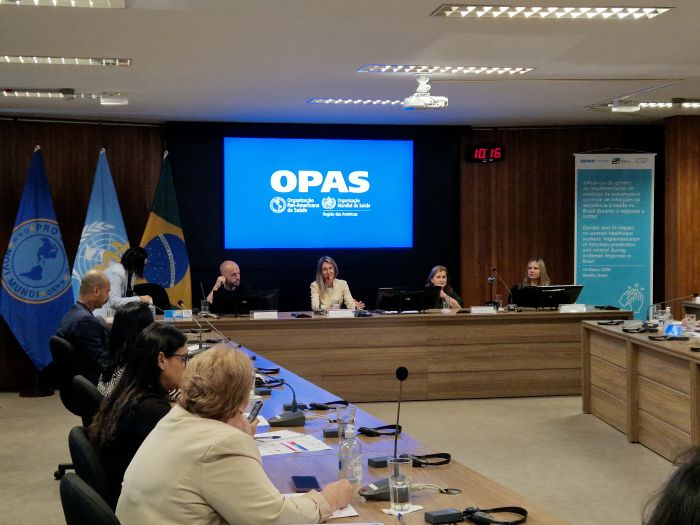
Following dissemination and completion of the survey and results of the semi-structured interviews amongst healthcare personnel across Brazil a second workshop was prepared. This workshop brought together over 20 experts from across Brazil involved in IPC, ranging from the World Health Organization Pan American Health Organization (WHO PAHO), Brazilian Ministry of Health, Ministry for Women, Brazilian Health Regulatory Agency (ANVISA), epidemiologists, regional healthcare professionals and many more.
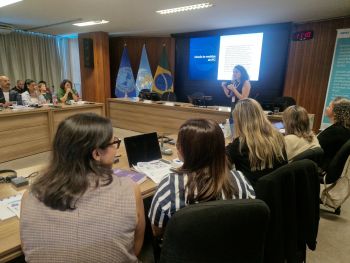
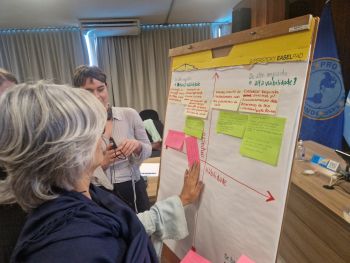
Workshop participants drew on the findings from the research project which included results from a literature review, written survey and qualitative interviews with key Brazilian experts. Together, the group discussed and proposed several actionable gender inclusive IPC recommendations for Brazil based on their feasibility. These were then refined and ranked on their ability to be implemented on the ground.
Based on the project’s findings and rich discussion during the workshop, the next step is a roadmap – developed with support from the UK-PHRST Capacity Strengthening team - outlining how to strengthen gender-equitable IPC policy and practice recommendations for use in Brazil. The team hope to support the production of national policy and practice recommendations that can also be adapted to other similar. low-to-middle income country contexts.
UK-PHRST's role
Throughout the study, UK-PHRST has provided technical expertise on the gender equality and IPC to further strengthen the knowledge and capacity of Brazilian counterparts undertaking the research.
|
Maria Clara Padoveze study co-lead from the University of São Paulo School of Nursing said: “Working with the UK-PHRST has allowed us to co-develop a high-quality research project that harnesses both Brazilian and UK expertise and skillsets, particularly regarding gender expertise, in a harmonious and equitable way.” |