
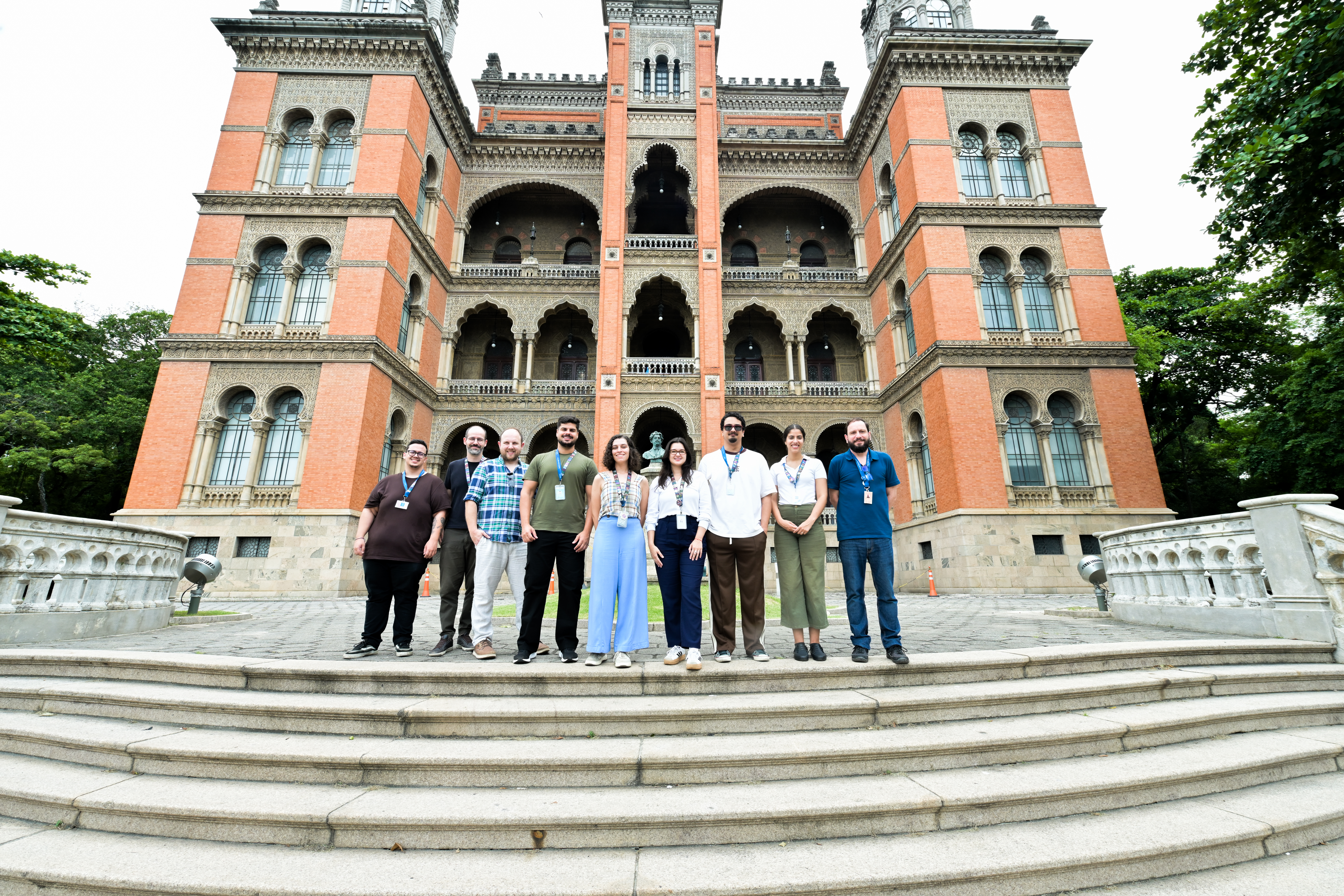
UK-PHRST and IOC/Fiocruz professionals and students at Moorish Castle, Fiocruz headquarters, Rio de Janeiro. Credit: Rudson Amorim/IOC/Fiocruz.
Rodent-borne viruses are a growing public health concern across South America. In Brazil, the rapid expansion of towns and cities into natural habitats is bringing people into closer contact with wild rodents that can carry potentially dangerous viruses. Despite this growing risk, we still know relatively little about which viruses are circulating in rodent populations across key areas of Brazil, or how often people are being exposed to them.
This study, co-led by researchers at the Oswaldo Cruz Institute (Fiocruz) in Rio de Janeiro and UK-PHRST aims to fill that gap. The research focuses on the Atlantic Forest - one of the world's most biodiverse, and most threatened, ecosystems - where deforestation and urban growth are pushing communities closer to wildlife, including rodent species known to carry arenaviruses, hantaviruses, and other pathogens.
Why is this research needed?
Several serious outbreaks in South America in recent years have highlighted the threat posed by rodent-borne viruses. These include hospital transmission of Chapare arenavirus in Bolivia (2018), person-to-person spread of Andes hantavirus in Argentina (2018–2019), and the re-emergence of Sabiá virus in Brazil (2019–2020), where the rodent source has not yet been identified.
A key challenge is that arenavirus haemorrhagic fevers are often mistaken for more common illnesses like dengue or yellow fever. This means cases frequently go undiagnosed and unrecorded, leaving communities without the protection that timely surveillance and response could provide.
Previous research by members of this team has already identified two new arenaviruses in Brazil - Xapuri virus (XAPV) and Apore virus (APOV) - both of which share characteristics with known harmful pathogens. However, we do not yet know how likely these viruses are to infect people.
What will the study involve?
The study will focus on Rio Claro municipality in Rio de Janeiro state, a rural area within the Atlantic Forest where hantavirus and arenavirus cases have previously been reported and where people live and work in close proximity to wildlife.
The research team will trap and collect samples from wild rodents across different types of vegetation, then use advanced genetic sequencing techniques to identify which viruses they carry. Blood samples from local patients with unexplained fevers will also be tested to assess how much human exposure to these viruses may already be occurring. Any viruses of particular concern will be studied further in high-containment laboratories in the UK.
Alongside the laboratory and field work, the team will work directly with local communities and healthcare workers. This will include interviews with clinicians to understand their current awareness of rodent-borne diseases and how prepared they are to respond, as well as community workshops to help develop practical, locally-owned guidance on reducing exposure risk.
What will the research deliver?
The project will produce new diagnostic tests capable of detecting rodent-borne viruses circulating in Brazil. These tools will be available to Brazilian health authorities, WHO Collaborating Centres, and international laboratory networks should an outbreak occur in the future. The team will also establish methods for ongoing surveillance that can be maintained after the project ends.